Weekly Focus and Goals
The primary objective this week was to transition the abstract concept of Goshiki-mai (Five-Color Rice)—a historical shinobi communication method—into a concrete narrative and environmental design. The goal was to ensure that the lore is not just flavor text but a functional guide for player navigation.
Work Completed
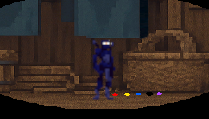
Event Scenario Scripting: Developed the "Laundry Room " event, detailing the atmosphere, the layout of damp indigo robes to create a "visual labyrinth."
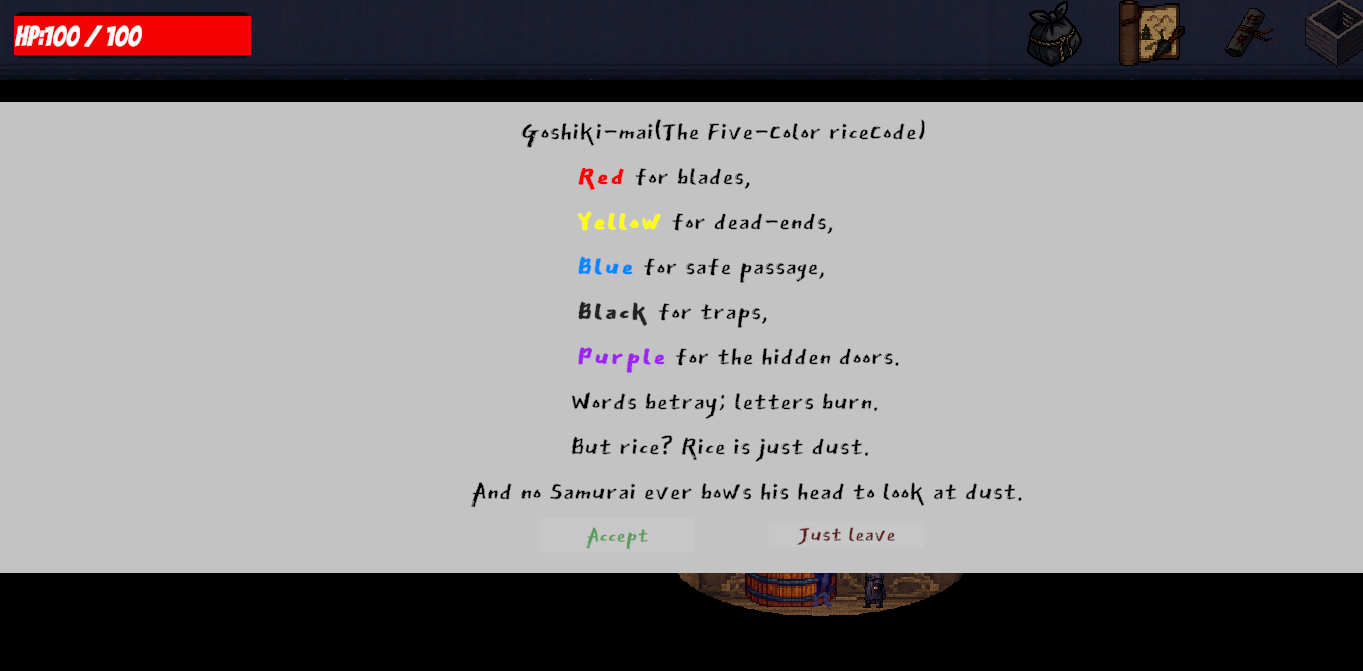
Dialogue Design: Authored the interaction between the player and the NPC .The dialogue was crafted to introduce the Goshiki-mai code through the metaphor of "dust," emphasizing the class-based blindness of the Samurai.
Technical Implementation (Unity/TMP): Successfully implemented a Rich Text system within TextMesh Pro to display the color-coded instructions.
Design Decisions and Rationale
The "Dust" Metaphor: By framing the colored rice as "dust," I am reinforcing the narrative theme of social hierarchy. The rationale is that Samurai, blinded by pride, do not look at the ground, making the floor the safest place for a ninja to leave a map.
Research and Precedents
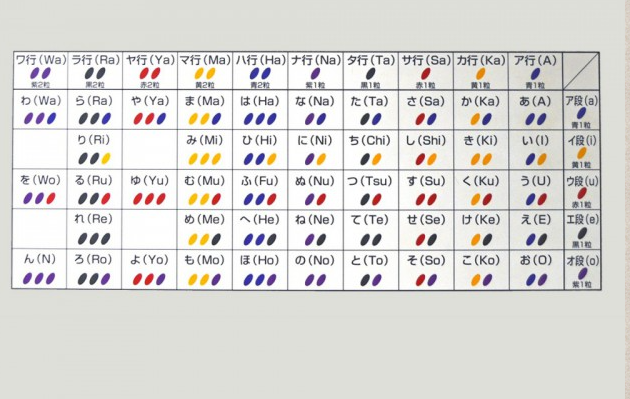
Historical Accuracy: Researched the Ninjia database regarding the authentic use of Goshiki-mai. In history, ninja used combinations of dyed rice to send 48 different pre-set signals.
Game Mechanics Reference: Studied environmental storytelling in Sekiro: Shadows Die Twice and Ghost of Tsushima, specifically how NPC dialogue can provide non-intrusive tutorials for complex mechanics.
Feedback and User Testing
Status: No formal user testing has been conducted this week .
Reflection
The integration of the Goshiki-mai code into the narrative feels strong and adds a unique layer to the stealth genre. However, I need to ensure the "rice particles" on the floor are visually distinct enough from the floor textures without breaking immersion.
Next Steps:
Combat Integration: Explore how the 5-color system can be used during combat.