Case Study: MOCAAD VR Experience
A Collaborative Digital Heritage Project for the Museum of Contemporary Art of the African Diaspora
1. Project Context & Goals
Description: A collaborative VR initiative with MOCAAD to transform physical local landmarks into immersive digital narratives.
Core Objective: To translate the "Game Changers” Mural—a local artwork—into a 3D interactive VR environment that educates users on the figures and social impact represented in the mural.
Design Challenge: Bridging the gap between 2D artistic representation and 3D spatial experience while maintaining historical accuracy and cultural sensitivity.
2. Team Structure & Role
Team Composition: A multi-disciplinary graduate cohort divided into Development, Research, Design, and Project Management teams.
My Role: Design Team-VR Environment Designer.
Responsibilities: Architected the immersive VR user experience and environmental layout for the "Game Changers" mural, translating its themes into a 3D spatial narrative..
Translated research findings into spatial concepts and environment layouts.
Constructed 3D scenes and asset arrangements within Unreal Engine and Unity (focusing on visual storytelling rather than backend programming).
3. Design Process
Contextual Research: I conducted deep-dive research into the specific figures within the mural. This ensured that every 3D asset and environmental detail added to the VR scene served a narrative purpose.
From Canvas to Space: I deconstructed the mural’s visual language to create a "Spatial Storyboard." My goal was to transform a "viewing" experience into a "walking" experience.
Environment Building: Using Unity and Unreal Engine, I built the virtual "Mural Space." We intentionally utilized low-poly modeling to minimize the project's file size and processing load, ensuring a consistently high frame rate and smooth performance within the VR environment.
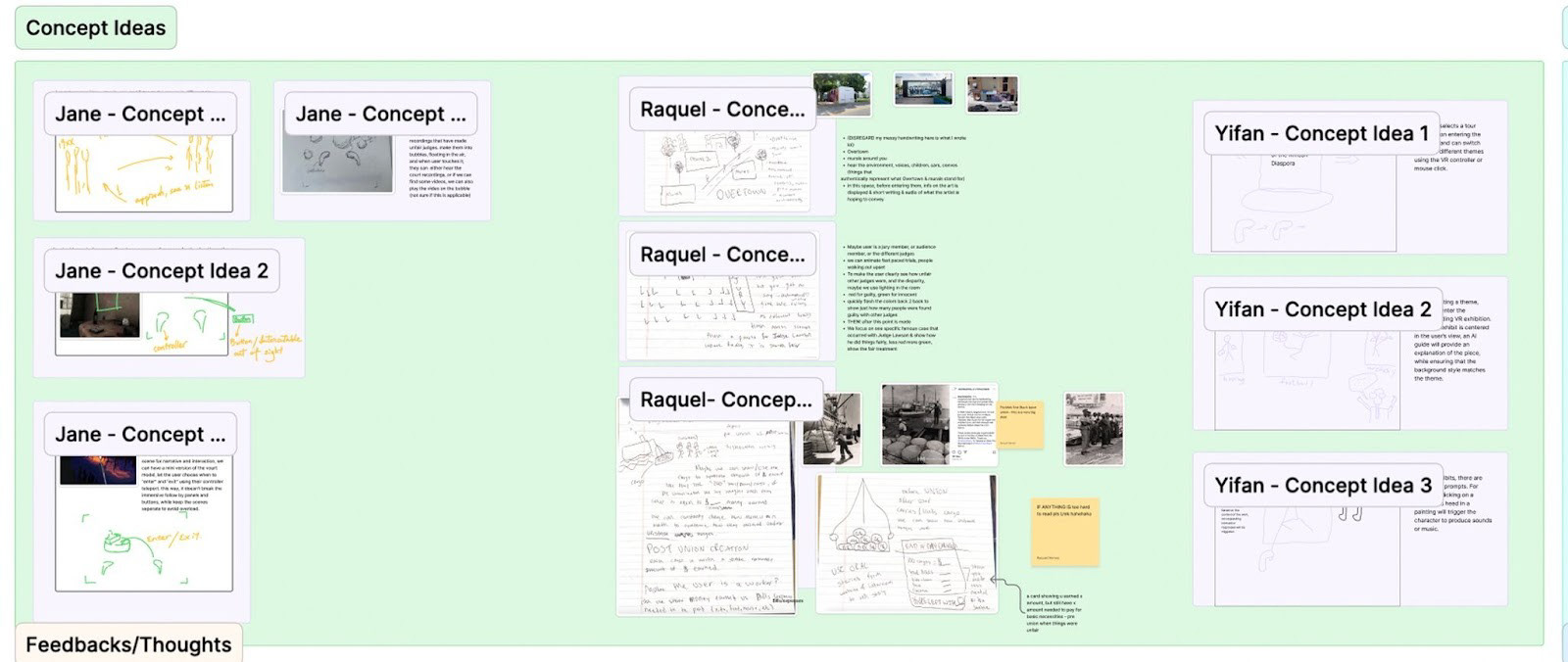
brainstrom

User map
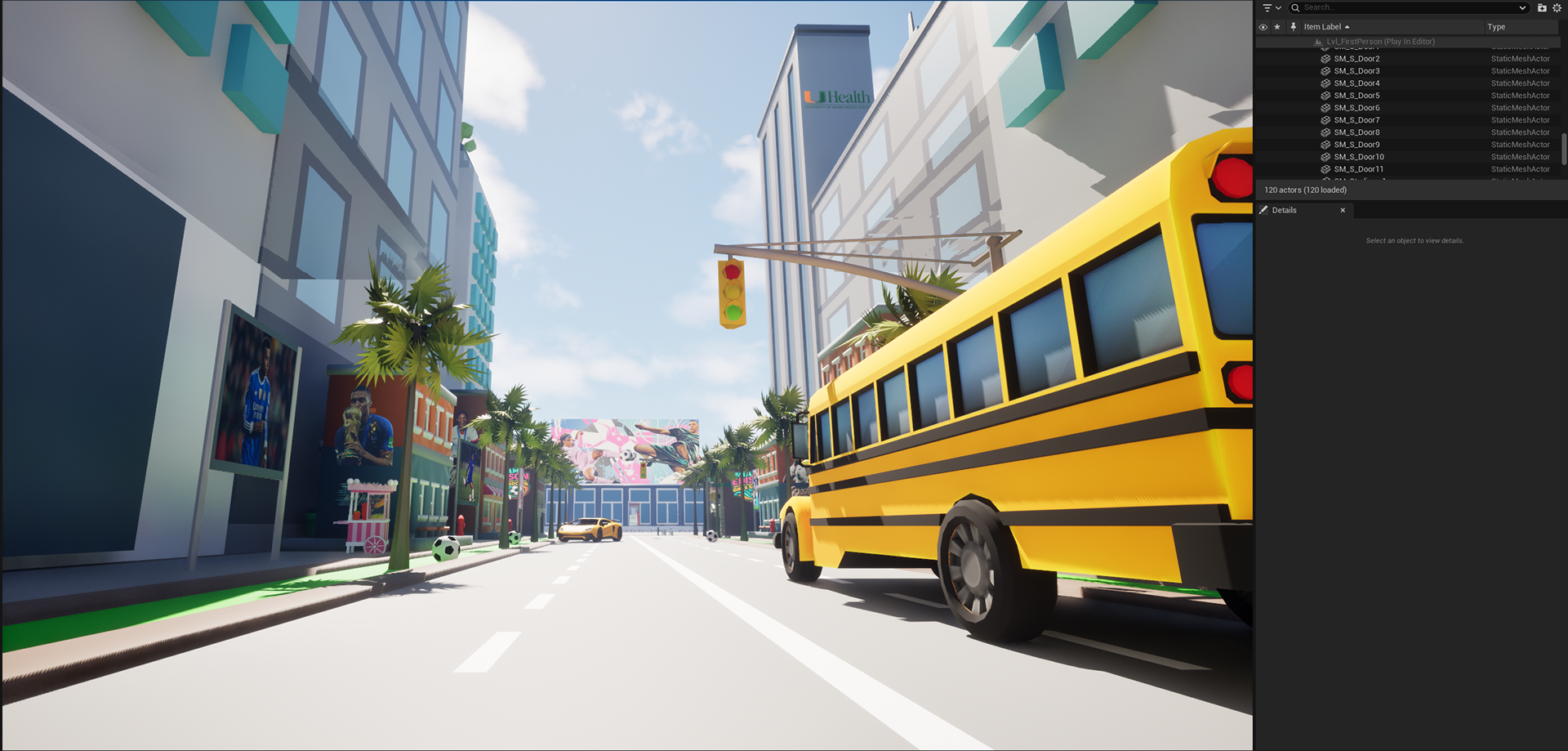
Environment built in Unreal
4. Key Decisions & Rationale
Environmental Storytelling: Celebrating the African Diaspora in Sports
Rationale: Rather than using traditional text-heavy displays, I integrated the narrative directly into the environment. By placing the soccer stars from the mural at the focal point of the VR space, I curated an atmosphere that celebrates the legacy of African Diaspora athletes.
Rationale: To honor the energy of soccer, the environment needed to feel vibrant and "alive." I designed the 3D space to echo the rhythm of a stadium.
5. Final Outcomes & Reflections
Outcomes: Successfully delivered a high-fidelity VR prototype to MOCAAD, providing a scalable model for how the museum can digitize other physical murals in the future.
Reflections: * Research as a Creative Tool: This project proved that for VR, "Research" is not just about facts—it is the foundation of Spatial Empathy. Understanding the history allowed me to design a space that felt "alive" and meaningful.
Cross-Functional Synergy: Operating as the bridge between the Research team’s data and the Development team’s technical constraints was a vital learning experience in professional communication and project integration.