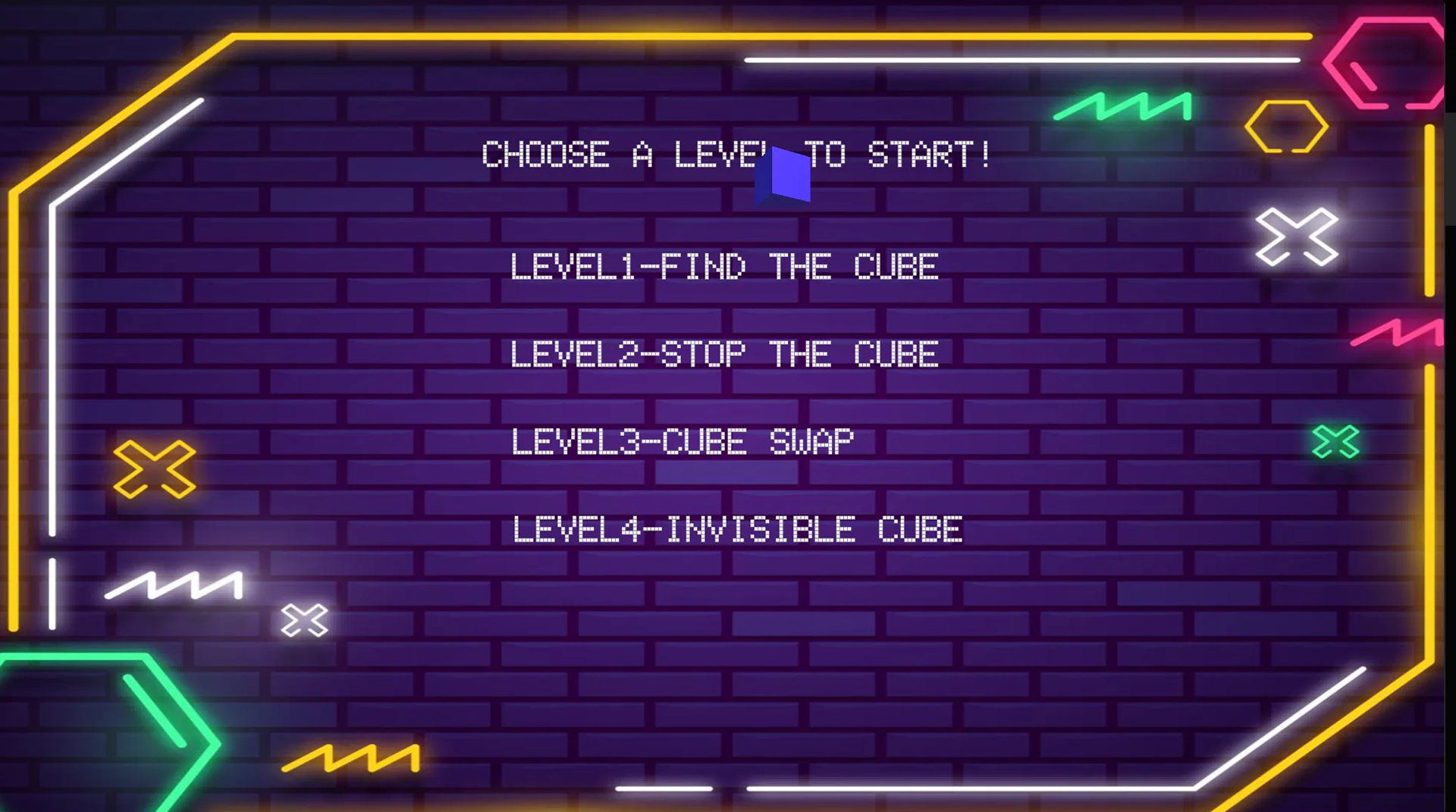
Case Study: Find the Cube (Asymmetric 2D Competitive Game)
1. Project Context & Goals
Description: A Unity-based 2D local multiplayer game featuring four distinct levels of asymmetric "hide-and-seek" mechanics.
Core Objective: To explore how visual deception, predictive movement, and information asymmetry can create engaging social interaction between two players.
Design Challenge: Designing intuitive but contrasting roles for two players—one focusing on deception and evasion, the other on observation and precision.
2.Role & Collaborators
Role: Solo Designer & Developer.
Responsibilities: Conceptualized all four unique gameplay mechanics, implemented 2D physics and AI movement logic in Unity (C#), and designed the minimalist visual system to focus player attention on movement patterns.
3. Level-by-Level Mechanics & Design Process
Note: This project demonstrates my ability to iterate on a single theme (Identity & Detection) through four distinct mechanical lenses.
Level 1: Social Deduction & Mimicry
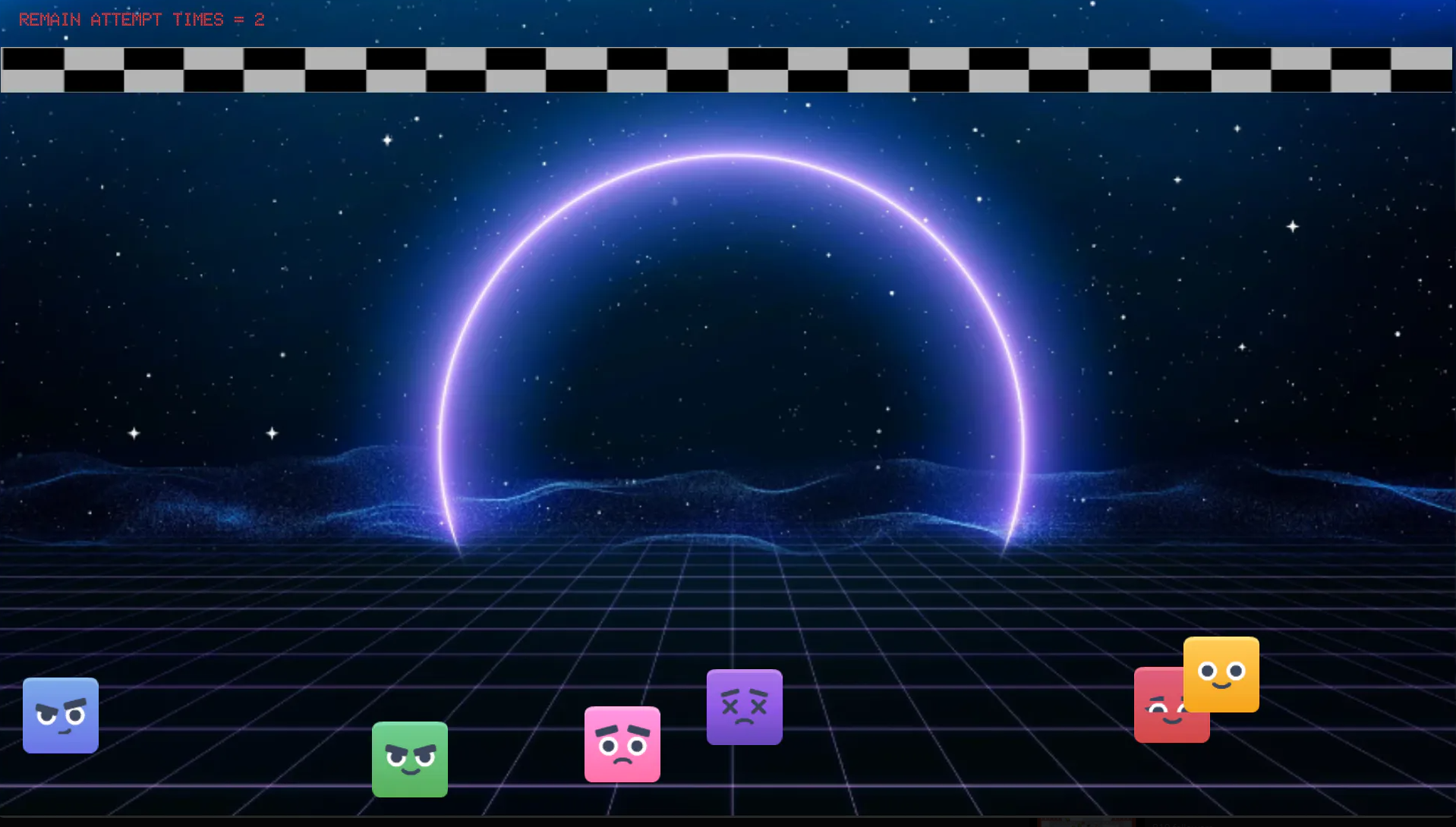
The Logic: Player A mimics the AI-controlled cubes to blend in, while Player B observes movement patterns to identify the human player.
The Logic: Player A mimics the AI-controlled cubes to blend in, while Player B observes movement patterns to identify the human player.
Design Decision: I limited Player B to only two guesses. This adds high stakes to the observation phase, preventing "click-spamming" and forcing a deeper analysis of Player A’s subtle movement "tells."
Level 2: Chaotic Evasion
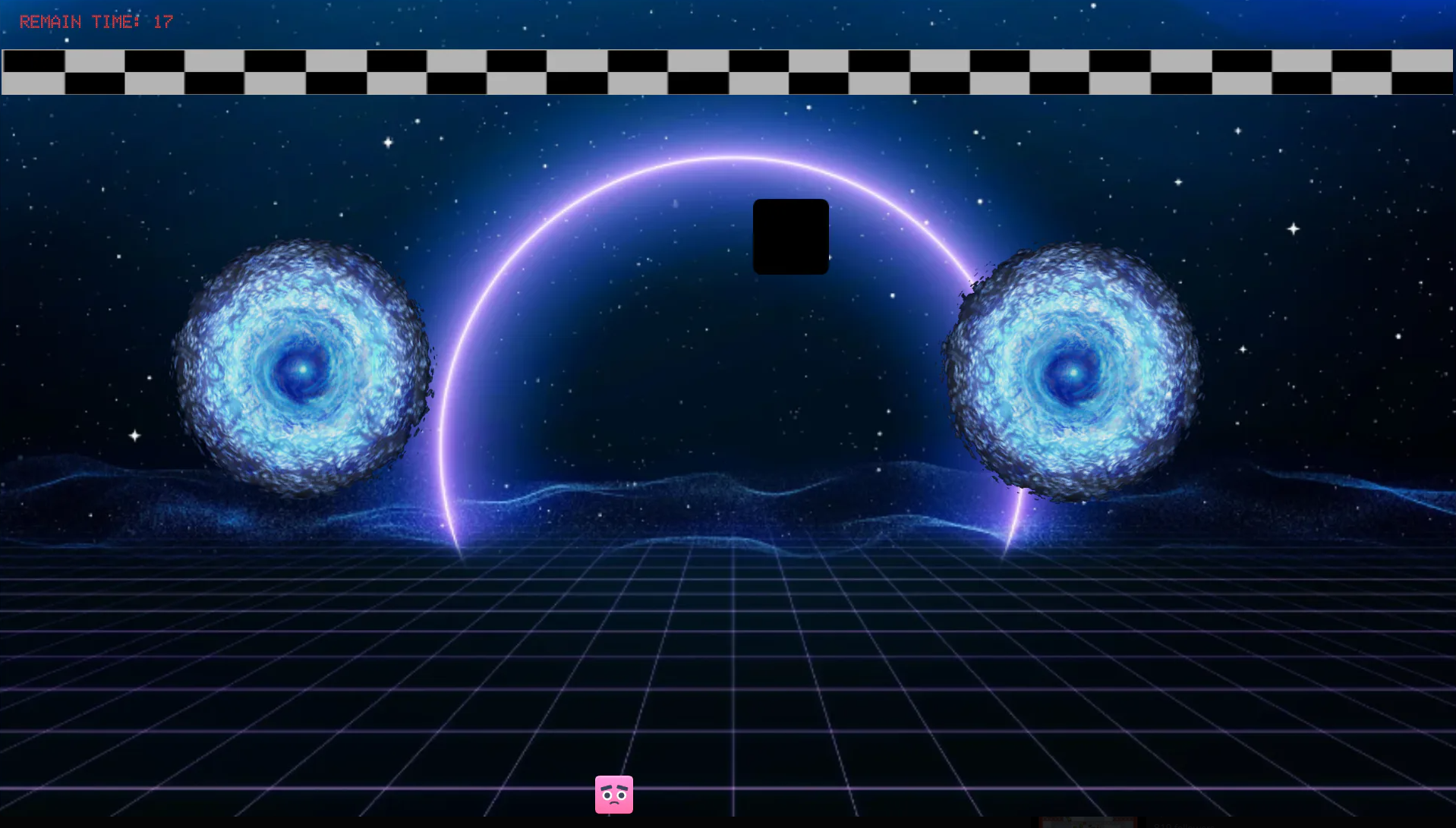
The Logic: A survival challenge where Player A navigates environmental hazards (Star Clusters) and Player B acts as an active antagonist (dropping projectiles).
Design Decision: Introduced "multi-layered threats." By forcing Player A to dodge both autonomous (AI) and intentional (Player B) obstacles, I created a high-tension coordination test.
The Logic: A survival challenge where Player A navigates environmental hazards (Star Clusters) and Player B acts as an active antagonist (dropping projectiles).
Design Decision: Introduced "multi-layered threats." By forcing Player A to dodge both autonomous (AI) and intentional (Player B) obstacles, I created a high-tension coordination test.
Level 3: Cognitive Tracking
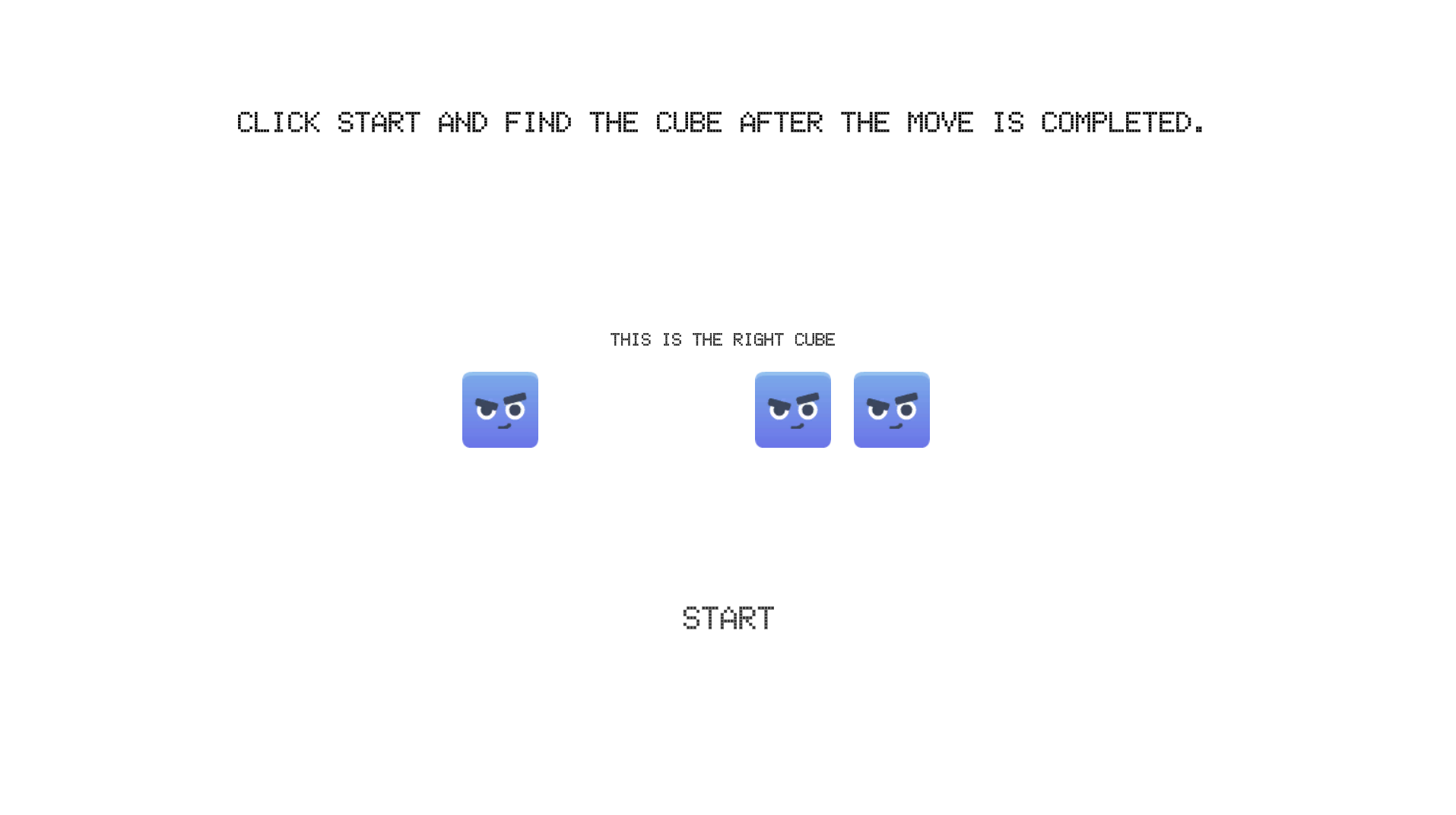
The Logic: A digital reimagining of the classic "Shell Game" (Cup-and-ball).
Design Decision: This level tests pure visual focus. I utilized Unity’s animation system to create complex, interleaved movement paths, challenging the limits of the player's short-term visual memory.
The Logic: A digital reimagining of the classic "Shell Game" (Cup-and-ball).
Design Decision: This level tests pure visual focus. I utilized Unity’s animation system to create complex, interleaved movement paths, challenging the limits of the player's short-term visual memory.
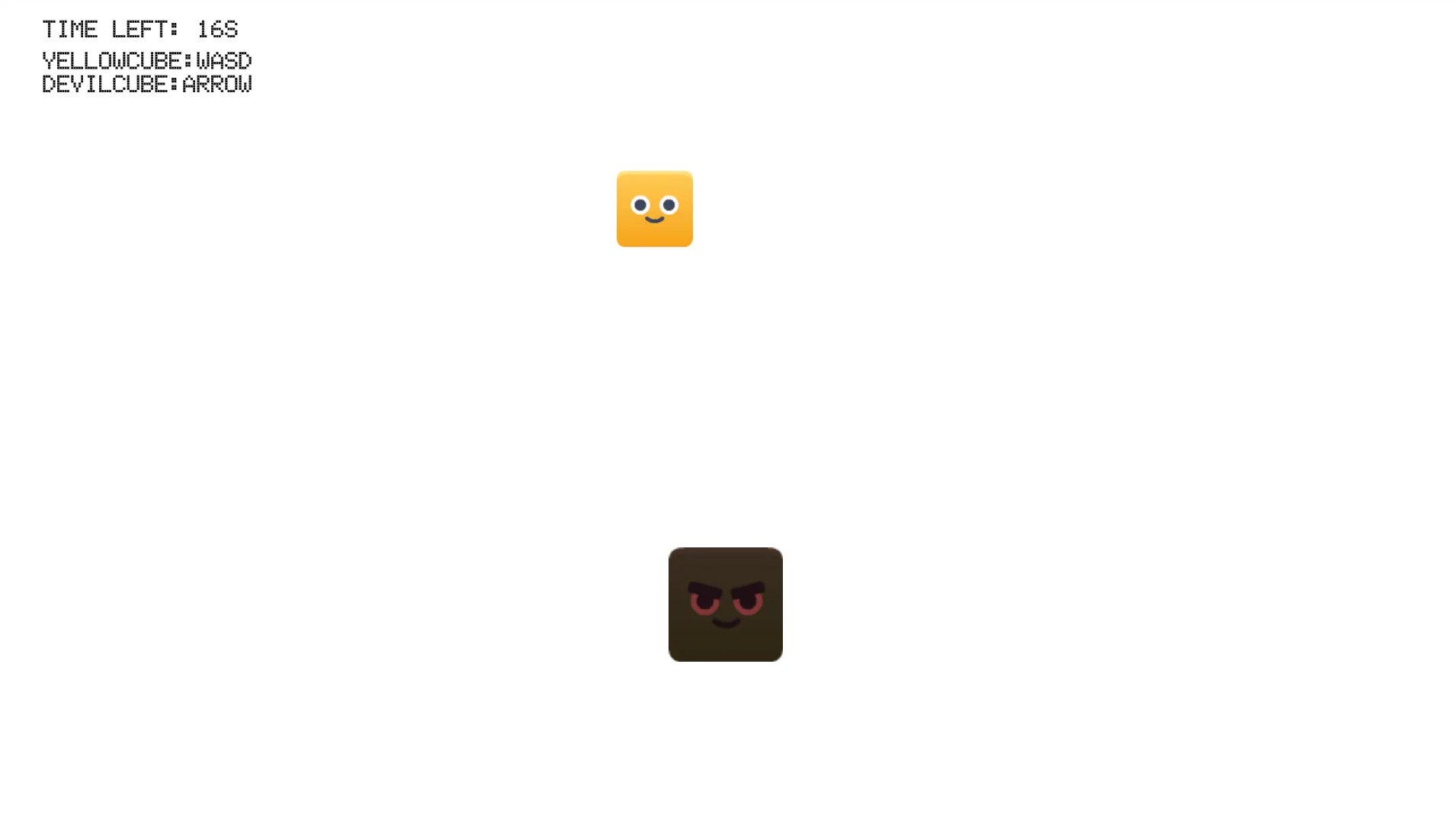
Level 4: Invisibility & The Hunt
The Logic: A high-speed chase where Player A has a "Stealth" ability (slow but invisible) and Player B has "Speed"&“Size” advantage.
Design Decision: This explores the balance between power and vulnerability. Invisibility is Player A's only defense against Player B's superior speed, creating a tense psychological game of "where did he go?"
The Logic: A high-speed chase where Player A has a "Stealth" ability (slow but invisible) and Player B has "Speed"&“Size” advantage.
Design Decision: This explores the balance between power and vulnerability. Invisibility is Player A's only defense against Player B's superior speed, creating a tense psychological game of "where did he go?"
4. Key Decisions & Rationale
Minimalist Visual Language: I intentionally used basic geometric shapes (Cubes).
Rationale: By stripping away complex graphics, the player focuses entirely on movement and behavior. This highlights the "Human vs. AI" movement contrast, which is the core soul of the game.
Asymmetric Design: Each level gives players completely different controls and objectives.
Rationale: This fosters "couch co-op" communication and replayability, as players must switch roles to experience the full strategic depth of the game.
5. Final Outcomes & Reflections
Outcomes: Successfully developed a functional four-stage prototype in Unity that demonstrates a wide range of C# programming skills (AI pathfinding, timer systems, and collision detection).
Reflections: * The Power of Simplicity: I learned that complex joy can emerge from very simple rules—specifically how "hiding in plain sight" (Level 1) creates more tension than traditional combat.
Future Pivot: I plan to refine the "Stealth" mechanic in Level 4 by adding environmental "footprints" (like dust clouds) so Player B has more clues to track the invisible Player A.